
A ONE WEEK SLOW TRAVEL THROUGH SOUTHERN PORTUGAL: A guide for those who've done Lisbon and are ready to go deeper.
Updated: Aug 2
Story by Michael Ong
Photos by Michael Ong, William Brown and Subashini Nadarajah
(Look for the download buttons at the end of the journal to download the Southern Portugal itinerary and map)
There's a version of Portugal most people know, the Pastéis de Nata in a Baixa Café, the busy funiculars up and down the sloping hills, the viewpoints of Bairro Alto crowded with golden-hour seekers, the cobblestones of Alfama. It's beautiful, and it earns every visit. But there's another Portugal that unfolds slowly, through a car window, down a winding coastal road, in a town where the rhythm is set by the pace of the locals.
This itinerary is for that Portugal. Rent a car, head south, and let the country come to you at its own pace. No rushing between monuments, no racing to check landmarks. Just the open road, the Atlantic, and a week spent somewhere between the Algarve and the secluded, bohemian coastal escape of Comporta.

Photo by Michael Ong

GETTING THERE
The Drive South Is Already The Journey
Fly into Lisbon, pick up your rental, and resist the urge to drive straight to the highway. If time allows, cross the Tagus on the iconic Ponte 25 de Abril (the 25th of April Bridge, it feels uncannily like the Golden Gate) and pull over at the Santuário de Cristo Rei, the Sanctuary of Christ the King. The statue watches over Lisbon from the south bank, and the view back across the river is one of those cinematic moments that sets the tone for the whole trip.

Top three Photos by Subashini Nadarajah

Photo by Michael Ong
Then it's the A2 south, two and a half smooth hours through the Alentejo, rice paddies flashing past, cork oaks stripped to their russet trunks, the landscape opening and breathing. As you near the Algarve, the terrain shifts: the road climbs into hills, then tips you down the other side into a coastal world of whitewashed fishing towns, historic traces of the Moorish era, and well-manicured golf courses set among the surrounding communities.
The Algarve's coastline stretches roughly 155 miles, and it is genuinely two different coasts in one. Head east and you find lagoons, salt marshes, and long natural sandy beaches. Head west and the landscape turns dramatic: golden limestone cliffs, sea arches, caves you can kayak into if you're brave enough.
Days 1 & 2: Luz de Tavira
The Eastern Algarve at Its Most Unhurried
Stay: Quinta do Pinheiro
The eastern Algarve doesn't get the same headlines as Lagos or Albufeira, and that is precisely its gift. Luz de Tavira, nestled between Tavira and Faro, is somewhere you find yourself describing to people as a "hidden gem" and wishing not to tell too many people about after all.
Quinta do Pinheiro has a story worth knowing. In 2021, Dutch couple Martijn Kleijwegt and Monique Snoeijen bought this 35-hectare estate near the Ria Formosa Natural Park with purely private intentions, a dreamy Algarvean retreat to keep in the family for generations. But as they began restoring the 19th-century property with Portuguese father-and-daughter architects Frederico and Marta Valsassina, something shifted. The project grew into something too considered, too beautiful to keep to themselves.
Video by Michael Ong


Top four photos by Michael Ong

Photo by William Brown

Top two photos by Subashini Nadarajah
Top two photos by Will Brown
Top four photos by Subashini Nadarajah

Top photo by William Brown

Photo by reliable tripod
What they created is five private casas, each with its own character, all sharing the same quality of stillness that this corner of the Algarve does better than anywhere. It's genuinely secluded. The kind of quiet where you bathe in the sound of leaves rustling in the wind, yet only a short walk from the shore and a few minutes' drive from the fishing village of Santa Luzia. Santa Luzia is famous for its octopus, widely celebrated as the "Octopus Capital" of the country.
Top four photos by Subashini Nadarajah

Photo by Michael Ong


Top three photos by Subashini Nadarajah
Photo on left by Michael Ong and photo on right by Subashini Nadarajah

Photo by Michael Ong
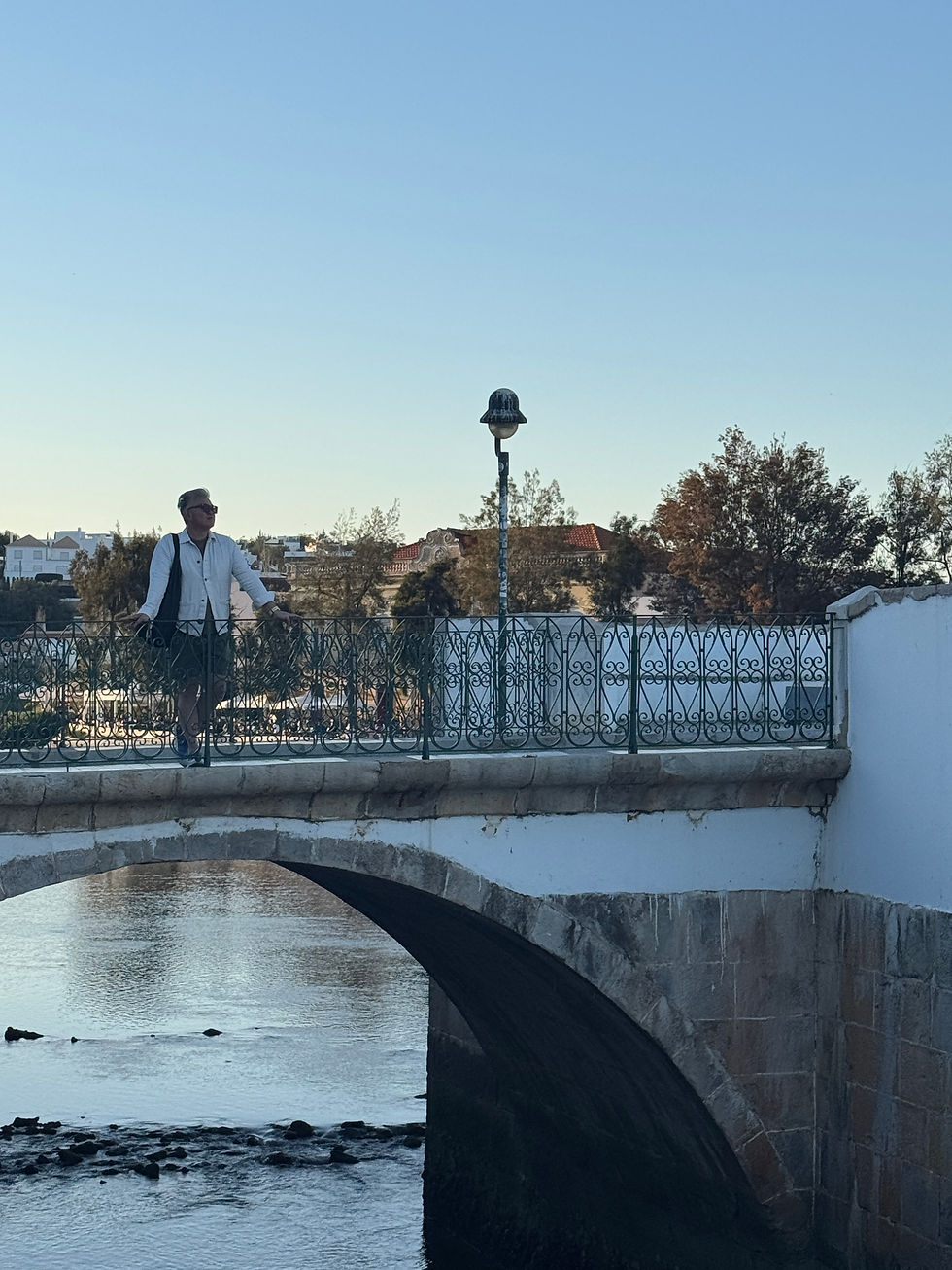
The town of Tavira is a short drive and entirely worth an afternoon. The Ponte Romana (Roman Bridge) spans the Gilão River in the old town center, and the surrounding streets are lined with ornate 18th-century townhouses, little churches, and café terraces where time moves differently. Wander without a map. Get slightly lost. That's how it's supposed to go.
Beach day: Praia do Barril
To reach Praia do Barril, you take a narrow-gauge train across the tidal flat, a delightful few minutes of transit that sets the mood as you approach. The beach is wide and wild, backed by dunes. In this unspoiled stretch, don't miss the Cemitério das Âncoras (the Anchor Cemetery): an extraordinary and slightly melancholy collection of hundreds of old anchors left behind by the tuna fishing industry that once thrived here. It's unexpectedly moving.

Photo by Subashini Nadarajah

Photo by Michael Ong
Left photo by William Brown and photo on right by Michael Ong
For dinner, make the short drive to Cabanas de Tavira for Noélia. Chef Noélia grew up in this town, and her restaurant had been an institution here long before the Michelin Guide came knocking, which it did, placing it on the recommended list and calling her the Queen of the Ria Formosa. The menu is seafood-forward, built around what was caught that day, and the rice stews (arrozes) in particular are worth making the trip for
on their own. Book ahead.
Days 3 & 4: Lagos
Westward with Stops Worth Making
The drive from Tavira toward Lagos takes you through the middle of the Algarve, and rather than racing through it, build in at least two stops.
Faro is the Algarve's historic capital and the flight gateway to the southern coast. Most visitors bypass it for the beach towns, but for a worthwhile stop, head to the Casco Histórico. Park near the marina (bring coins; the meters here are resolutely coin-only) and walk in through the Arco da Vila. Inside the walls, it feels like a different century. Grab lunch at any of the small eateries tucked into the lanes, the Old Tavern is a reliable stop before getting back on the road.

Top photo by Michael Ong


Top four photos by Subashini Nadarajah

Top three photos by William Brown
Top photo by Michael Ong
Above six photos by Subashini Nadarajah
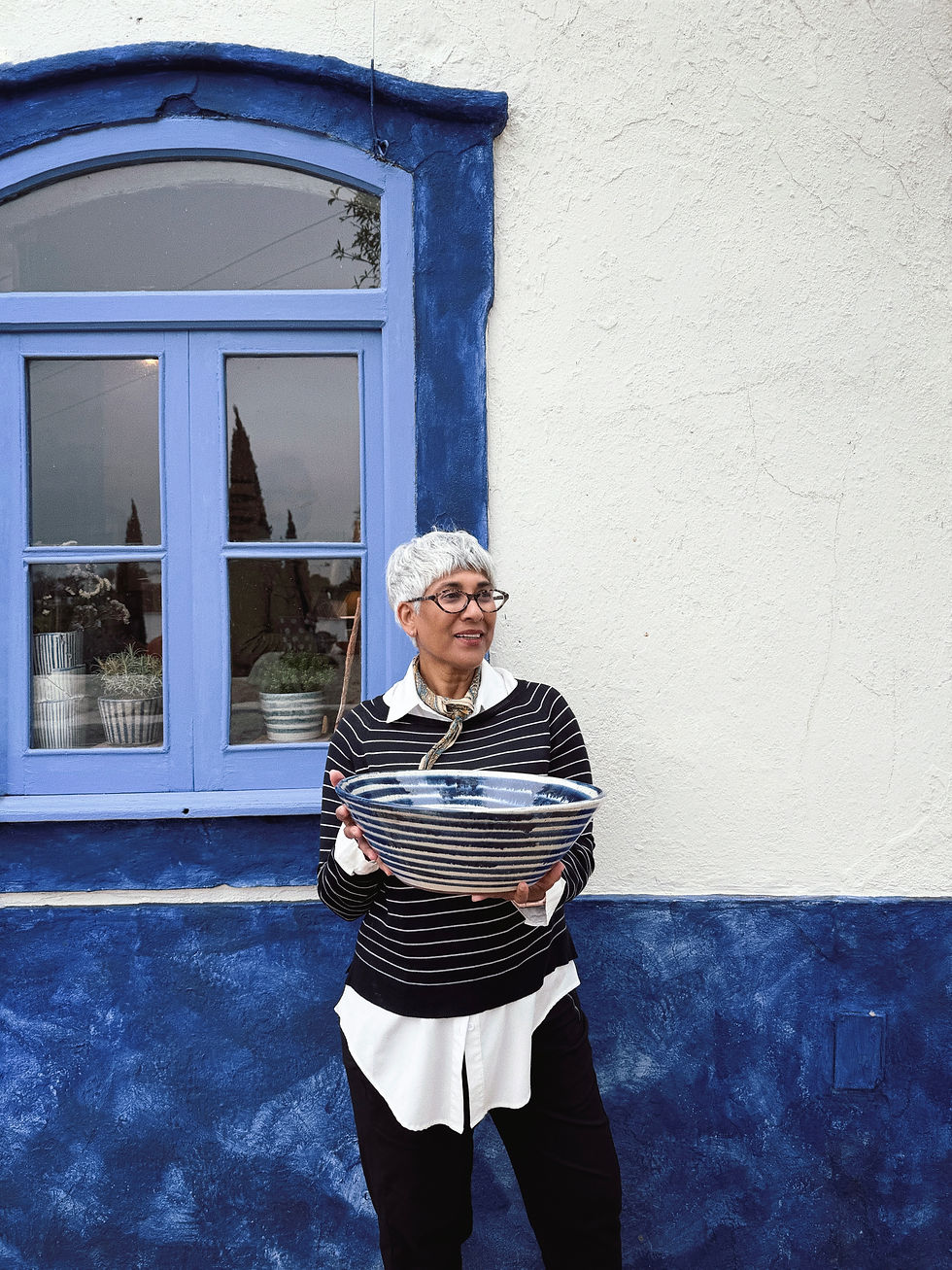
Porches is a small village with an outsized reputation for ceramics. A stop at Olaria Pequena is genuinely worth while, not the big touristy pottery shops that line the highway, but a smaller, more artistic studio. And unusually, there's a coffee shop inside the Porches Pottery complex itself: Bar Bacchus, a quietly excellent spot to pause before the last leg to Lagos. Be sure to pay a visit to the restroom the vanity and basin area is quite a feast for the eyes.
Stay in Lagos: Casa Mãe
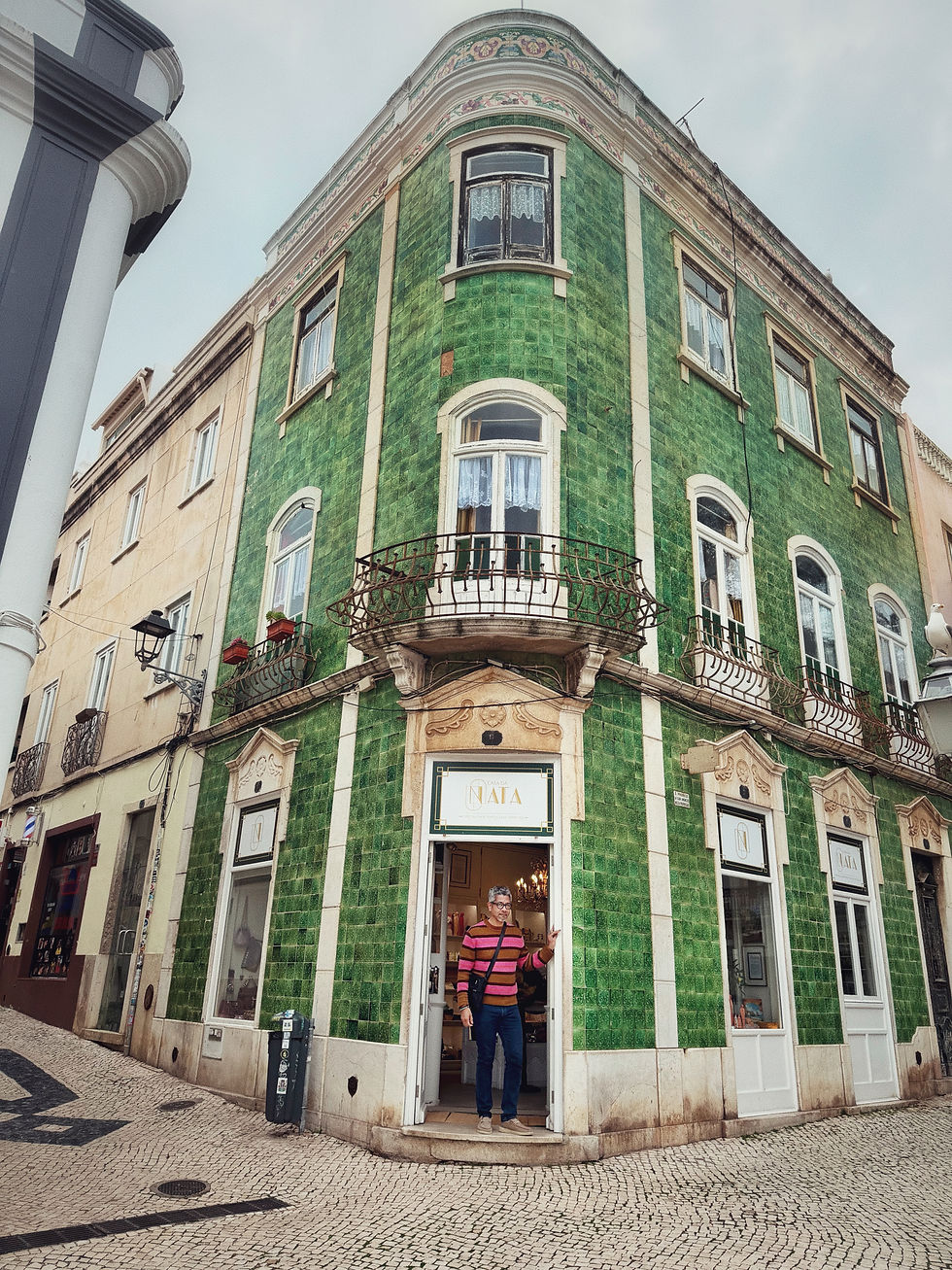
Lagos has a particular magnetism. The old town is compact and deeply charming Moorish walls, cobbled lanes so narrow that driving through them is not for the faint of heart. Leave the car at your hotel. You won't need it. Walk to the nearby beaches, to the marina, through the markets and the squares.


Above two photos by Michael Ong
Video by Michael Ong

Top five photos by Michael Ong
Casa Mãe is a 35-room boutique hotel set within a sprawling stone-walled estate right against the 16th-century city walls, and it has earned its reputation honestly. Featured in Monocle, Wallpaper, and the New York Times among others, it's become a reference point for what a design-conscious Portuguese hotel can be. Co-owner Véronique Polaert left investment banking in Paris to build it from an abandoned 19th-century estate, commissioning over 20 Portuguese craft and design companies to outfit the space, hand-woven rugs, locally thrown ceramics, bespoke toiletries, staff uniforms from the Lagos brand La Paz. Nothing here was an afterthought.
The hotel spans three distinct buildings, each with its own character: the original heritage house with suites furnished in warm vintage pieces, a modern whitewashed building with minimalist rooms, and the boho chic cabanas with outdoor showers and a barefoot-luxury feel. The courtyard garden is a working vegetable plot, and the farm-to-table restaurant Orta serves genuinely good food, even with the entire old town's eateries on your doorstep.
Top photo by Michael Ong

Top photo by Subashini Nadarajah
Bottom right photo by William Brown and rest of photos by Subashini Nadarajah
A full day on the shore
Set aside one full day for the coastline west of Lagos, and start at Ponta da Piedade at the far end. The rock formations here layered golden limestone carved into arches, sea stacks, and grottoes by millennia of Atlantic swell, are among the most beautiful in Europe. Walk the cliff-top boardwalk and let yourself be stopped every few yards by a view you weren't prepared for.

Top photo by Michael Ong

Top photo by William Brown
Top two photos by Michael Ong
If the sea is calm and the weather is cooperating, the best thing you can do is join a boat tour from the Marina de Lagos. Getting down to water level and gliding through the sea caves completely reframes the landscape. Kayaking is also an option for those who want to be even closer to the water: be prepared to get wet, and make sure you don't drop your phone into the sea.
The Algarve water is Atlantic cold even in summer. That said, the beaches are numerous and the sun is generous, and there is absolutely nothing wrong with spending an afternoon horizontal on warm sand soaking up the sun or working through a good book.
Days 5 & 6: Comporta
Portugal's Best-Kept Slow Travel Secret
The move from Lagos to Comporta is where this itinerary separates itself from the standard Algarve round-up. You have two options for the drive north: the direct A2 highway through the interior, or the N120 heading up along the western coast. The N120 runs close enough to the water that you feel the proximity of the Atlantic even when you can't see it, passing through small towns where you might pull over for coffee or simply stretch your legs. It's a two-lane road and you may find yourself behind a slower driver for a stretch, waiting for the right moment to pass, but that's fine. That's actually the point.
Comporta sits on the Setúbal Peninsula, about an hour south of Lisbon, in a region that feels like it belongs to another era. It has long been the retreat of choice for a certain kind of European traveller (creatives, artists, those who prefer their luxury understated) and it has the infrastructure to match: beautiful boutique hotels and spas, long white-sand beaches backed by rice paddies and cork forests, and an atmosphere of easy nonchalance.
Video by Michael Ong
Stay: Spatia Comporta
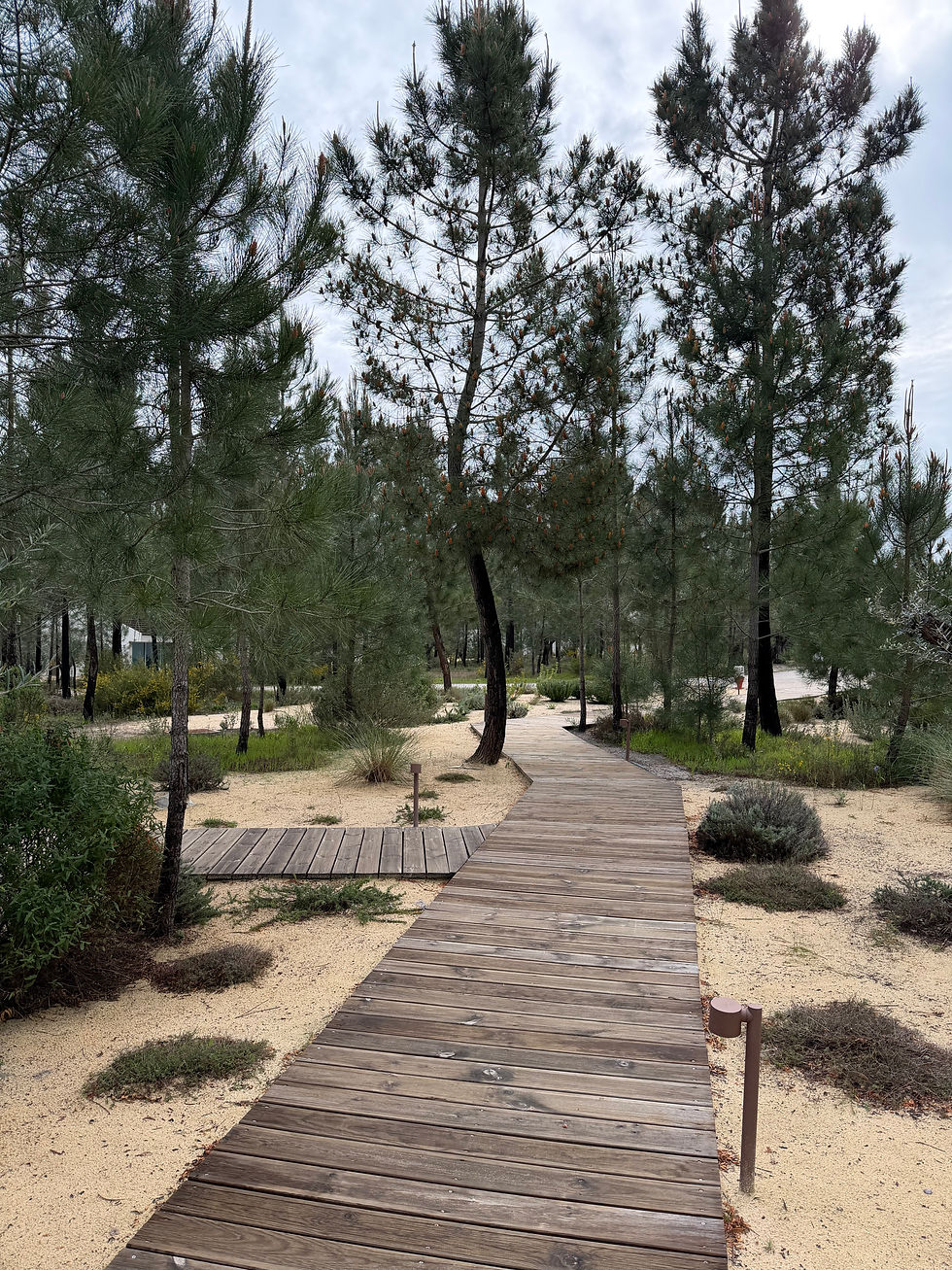
Spatia sits within a manicured clearing in the Alentejo pine forest, where you arrive and immediately feel your heartbeat slow down. Close enough to the village and the beaches to feel connected, yet the property itself is a world apart. Its 20 guestrooms, cabanas, and 27 villas have been designed around a single philosophy: that space itself is the luxury. The name says it plainly, "spatia" is Latin for space, room, openness and the property lives up to it. Generous rooms with private terraces look out into the pines and lavender gardens, while the cabanas go further still: thatched roofs, solid oak finishings, and open bathrooms where morning light filters through the trees over an open-air shower. The architecture nods to traditional Alentejo craftsmanship while keeping its lines clean and contemporary.

Top two photos by Michael Ong


Top four photos by Subashini Nadarajah
Service here is warm and attentive without being performative, staff seem to anticipate what you need before you've thought to ask. They are also happy to accommodate any special dietary needs. The restaurant, ŌRA Land & Sea, was one of the true dining highlights of the trip: unfussy and beautiful in equal measure, blending traditional Alentejo flavors with fresh Atlantic seafood in a refined, unhurried style. A fitting place to wrap up this kind of trip.

Photo by Michael Ong
Top quadrant two photos by Michael Ong. Lower quadrant two photos by Subashini Nadarajah


Top four photos by Subashini Nadarajah

Once again, photo by our reliable tripod
The nearby village of Comporta is small and walkable, with a handful of boutiques and restaurants worth seeking out. Stop by The Life Juice for well-curated, one-of-a-kind pottery, home décor accessories, and artisan wearables all good candidates for souvenirs that won't feel like souvenirs. Restaurante Sal has a beachy, surf-culture vibe that fits the place perfectly, sitting right next to the Sublime Comporta Beach Club, good for extending the afternoon at Praia do Carvalhal. And on the N261, keep an eye out for Comporta Selection, a home décor shop that announces itself with no fanfare yet
rewards the pull-over with beautiful objects unique to the region.
Left photo by Subashini Nadarajah and Right photo by William Brown

Photo by Michael Ong

Above photo by William Brown
The Return
The drive back to Lisbon airport from Comporta is refreshingly short. Take the Ponte Vasco da Gama across the Tagus and you'll find yourself deposited practically at the terminal. There are tolls along the way, but rental cars are equipped with scanners, so you won't need to stop at any booth. Just follow the signs.
A new bridge, a new angle on the city you flew into a week ago. A fitting end.
A Note on Who This Trip Is For
This is not the Portugal of queuing for the Number 28 tram or fighting for a table at the hot new restaurant in Bairro Alto. This is the Portugal of an afternoon in a fishing village, of a morning with nowhere specific to be, of a coastline that takes days rather than hours to understand.
It suits those who've already done Lisbon and are ready for a different scene. It suits those who travel for landscape and texture over monuments and itineraries. It suits sun-seekers who don't necessarily surf or swim. There is extraordinary pleasure to be found in just sitting near the Atlantic and watching it do its thing.
Rent the car. Pack lightly. Let Portugal find you.
Accommodation: Quinta do Pinheiro (Luz de Tavira) · Casa Mãe (Lagos) · Spatia Comporta (Comporta)
Stops: Santuário de Cristo Rei · Santa Luzia · Praia do Barril & Cemitério das Âncoras · Olaria Pequena · Ponta da Piedade · Comporta Selection
Car Rental: Guerin Rent-A-Car


Comments